
Back to all posts
A Considered Stay: Rome

Article by
Duncan Greenfield-Turk
The saying goes, "Rome wasn’t built in a day." And two days might not be enough to see Rome, but that’s been true for centuries. While you might not get to know every nook and trattoria in this ancient metropolis, it's enough to get an introduction to a place that will live long in your memories.
These are the stays that are curated, designed to experience a moment in time before moving on to the next. Not a journey built around lists of things to do but a purposeful, intimate 48 hours worth experiencing.
THE RIGHT ADDRESS
To us, Rome offers two very different ways to stay in the city. On the one hand, a hotel designed to feel like the city of old: impeccably well-dressed and always glamorous. On the other hand, a hotel built for modernity without nostalgia but with a quiet nod to the past.
The choice depends on the type of Roman you want to be.
The Garden at the Centre
Sitting quietly between Piazza del Popolo and the Spanish Steps, you’ll find Rocco Forte’s Hotel de Russie. A 19th-century-designed piece of history with a secret.
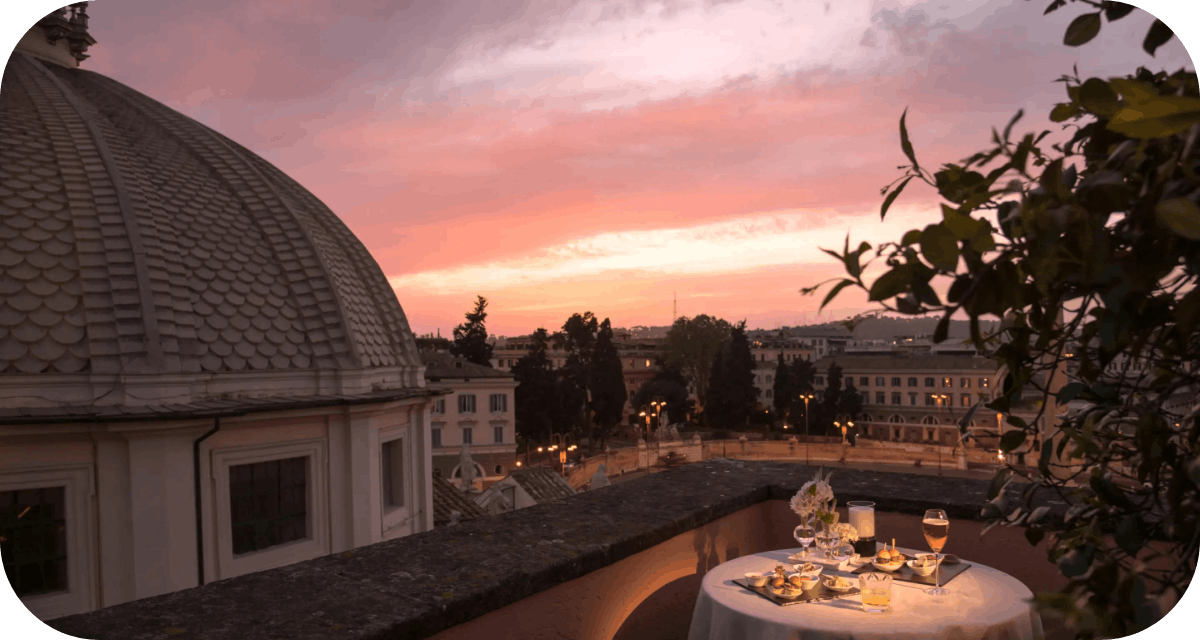
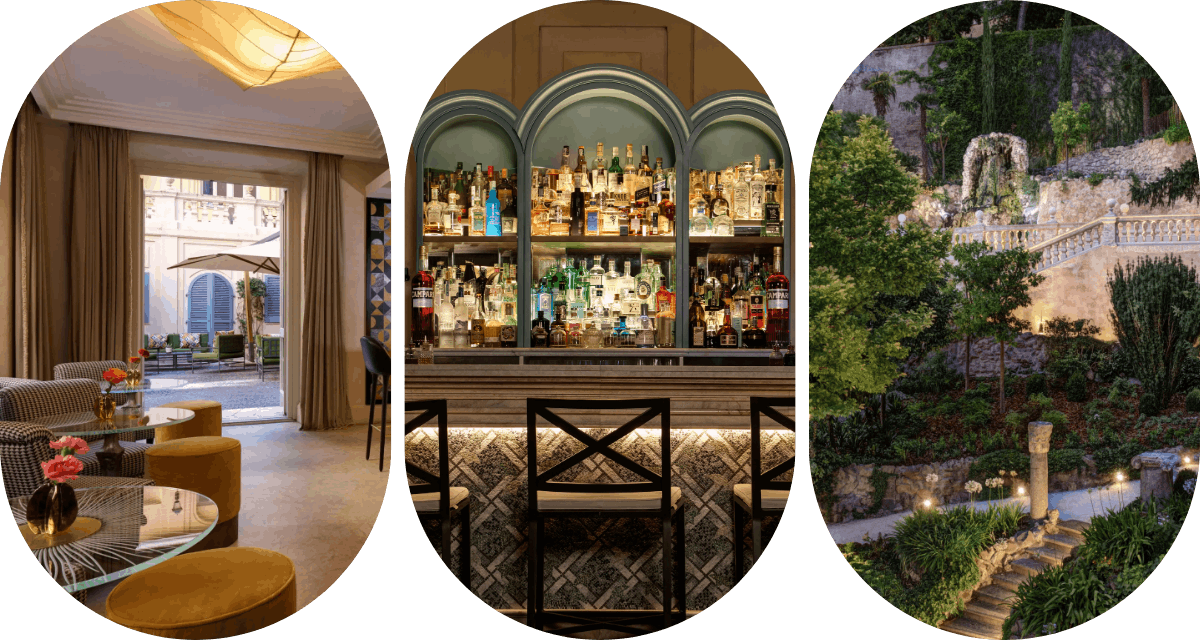
Step through the entrance, past the lobby and you’ll find a peaceful refuge in one of the world's busiest cities. The Secret Garden spans over 2000 square metres and is made up of tiered terraces, orange trees, rose bushes and towering pines. Somehow a waterfall threads through the centre of it, and it’s easy to see why Jean Cocteau called it paradise on earth.
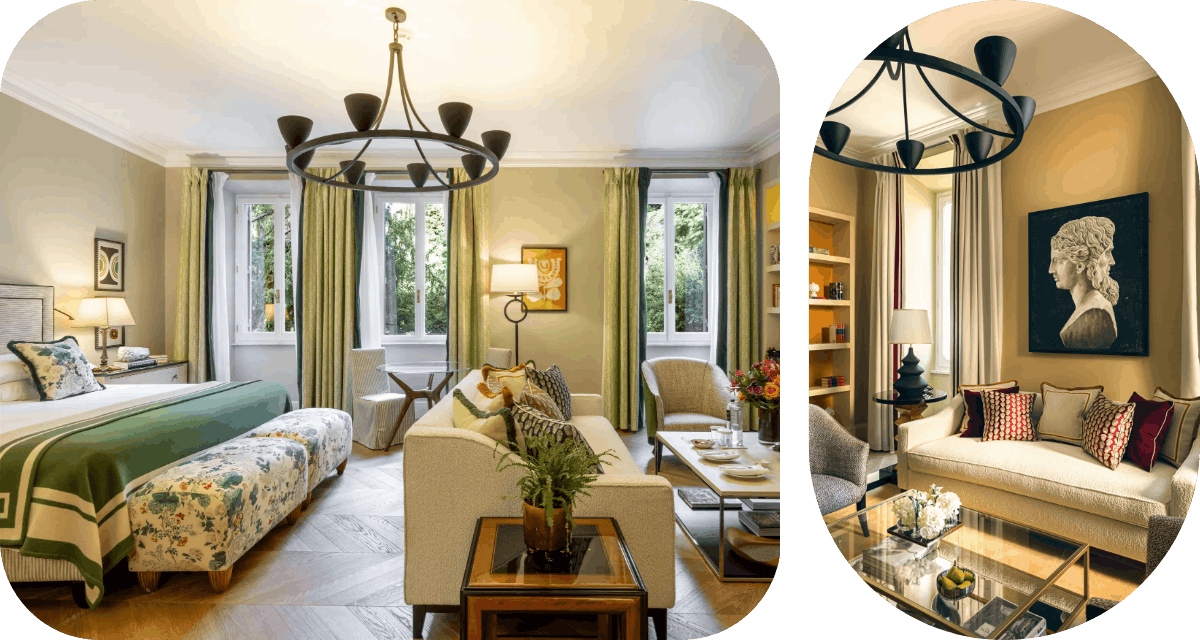
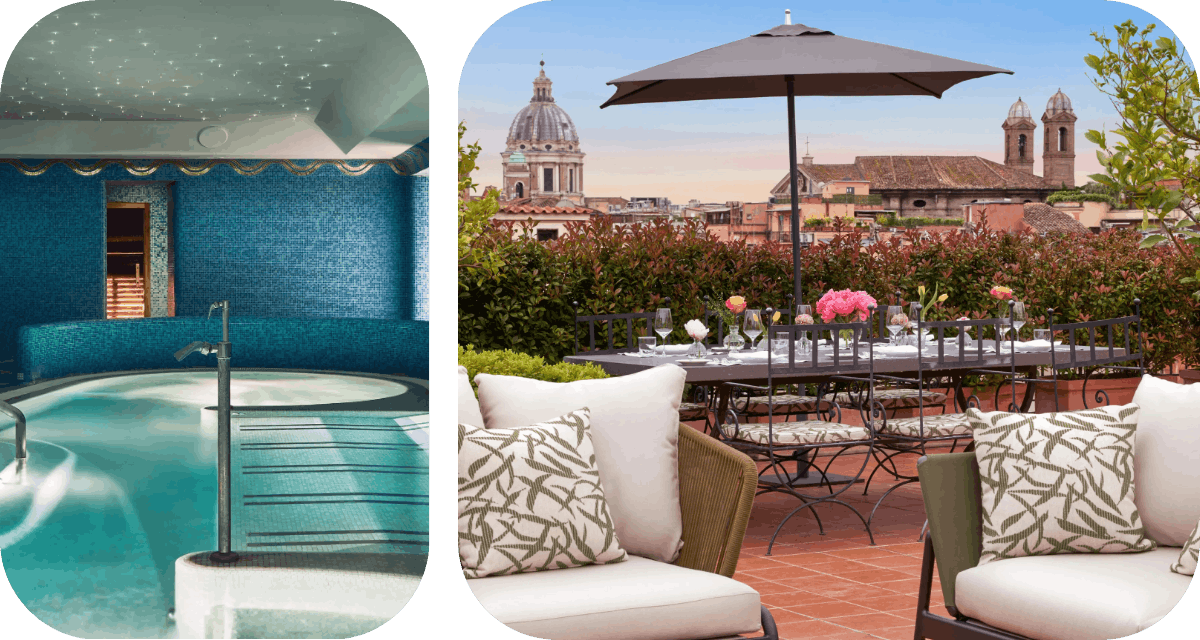
The hotel itself is hardly outdone by the surroundings, with wooden floors, marble bathrooms and warm tones throughout. The de Russie Spa, complete with a saltwater pool and Finnish sauna, is probably the best-kept “open secret” in Rome.
“Impossibly glamourous and old-world luxurious, though not stuffy in the slightest — a delicate balance to tread.” — Near+Far Magazine (founded by former CondéNast Traveller editor Isabella Craddock, founding Academy Chair, The World’s 50Best Hotels)
Present-Day Palazzo
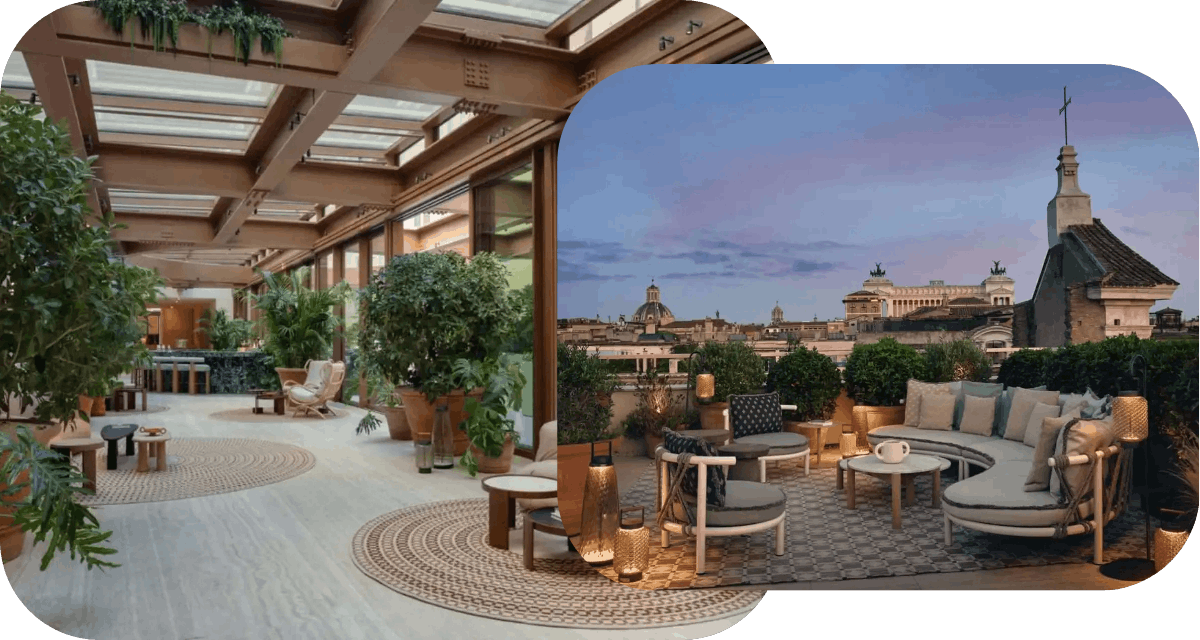
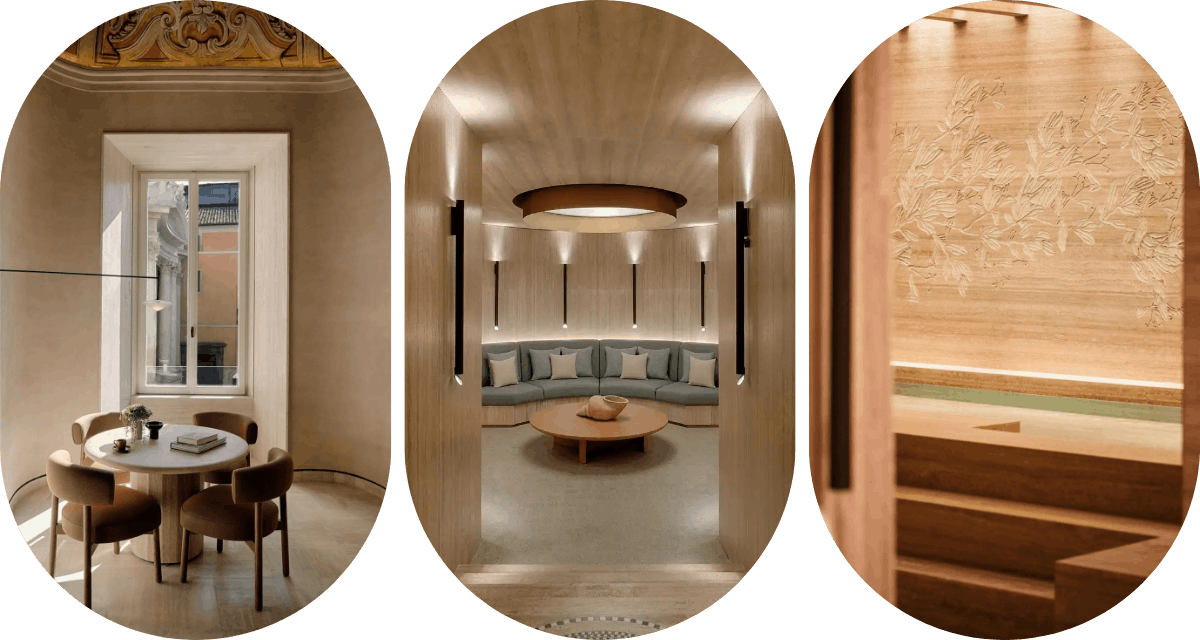
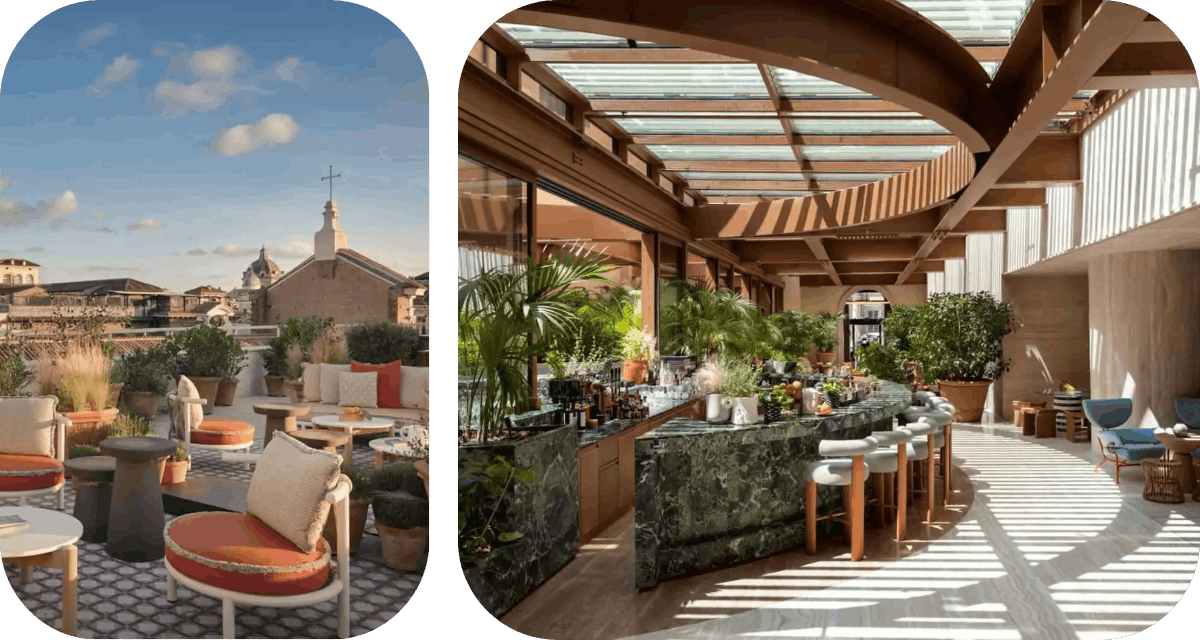
For those who want to experience Rome as it might have been imagined today, Six Senses Rome sits within a former 15th-century cardinal’s residence, on a quiet piazza five minutes from the Pantheon. While the exterior and architecture have been meticulously preserved on the outside, inside is nothing short of an exercise in contemporary design.
However, the real argument for Six Senses Rome lies a floor below the lobby, where the Roman bathing circuit has been designed around the ancient ritual of heating and cooling the body through a caldarium, tepidarium, and frigidarium. This is not a spa with a Roman theme. It’s a considered reinterpretation of a practice that shaped this city for centuries, executed to a standard that justifies every superlative applied to it.
“Thespa, naturally, is a lavish one, a Roman bath to end all Roman baths.” — The Michelin Guide
Also Opening: Corinthia Rome
An aside here: the newly completed Corinthia Rome opened in February 2026, and the result is 60 rooms and suites of generous scale, including suites that retain 1920s frescoes by Giulio Bargellini and one whose private terrace looks out over the Italian Parliament.
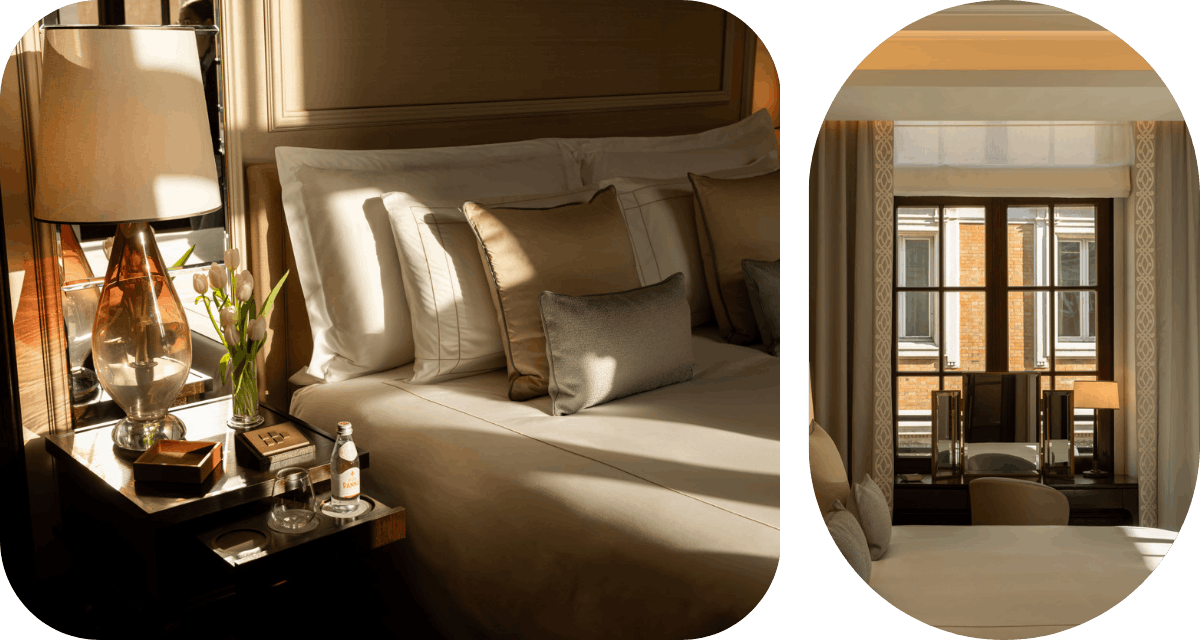
The spa occupies the former bank vault, and the hotel has three distinct dining venues, including Viride, an elegant dining room overlooking the internal garden.
THE FIRST NIGHT
Rome insists on aperitivo. The ritual of the early evening drink, the moment when the day’s heat starts to lift and the city's focus shifts, is one of the things this city does better than anywhere in the world. At de Russie, the Stravinskij Bar handles this with the ease of a century's practice: cocktails are herb-infused from the garden, and tables spill into the courtyard.
The first night anywhere should be an experience, and this one belongs to Il Pagliaccio. Chef Anthony Genovese’s two-Michelin-star restaurant on Via dei Banchi Vecchi seats ten tables and no more, and the tasting menu draws on a life of cooking across Italy, France, Japan, and Malaysia.
The “Otto” menu, eight courses that follow the arc of his career, is among the most personal meals available in Rome and is worth the effort of trying to secure a booking.
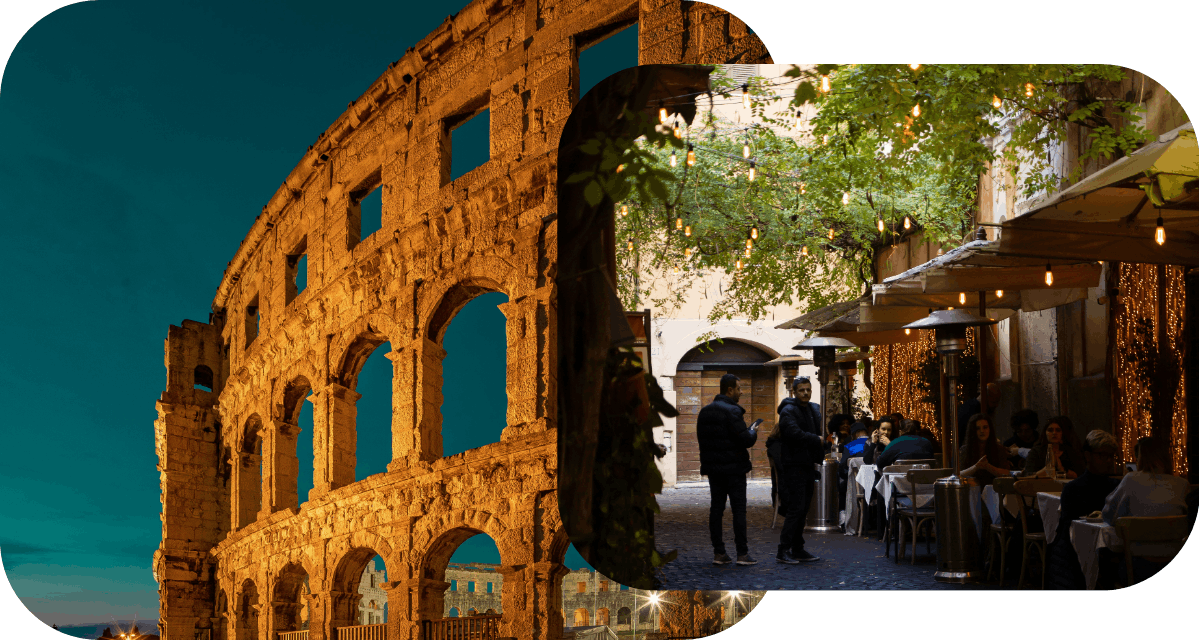
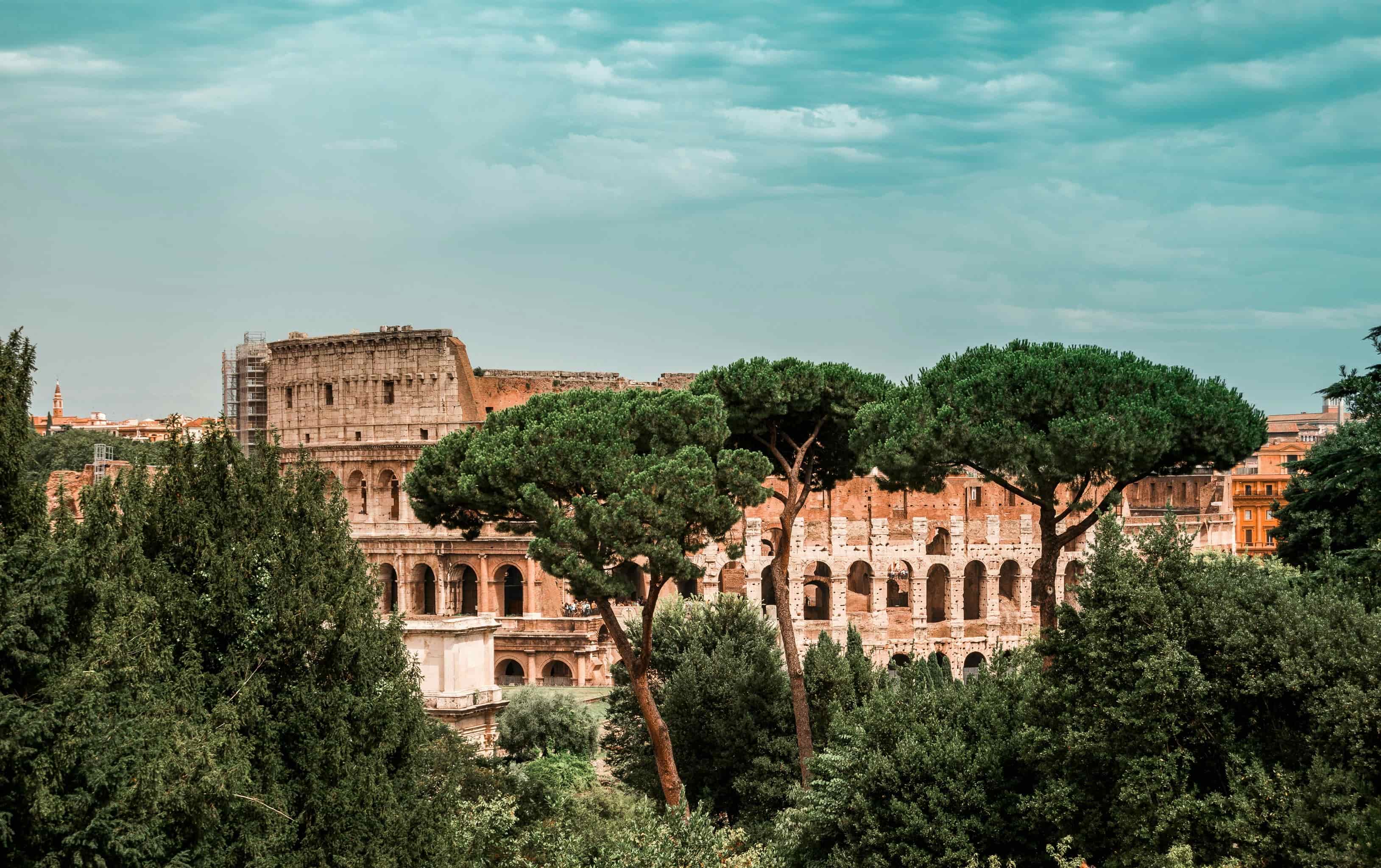
Next stop: Trastevere. While Rome’s queer neighbourhood is not concentrated in one district the way other cities manage it, Trastevere is among the city’s most welcoming quarters, with a warmth that belongs to the neighbourhood rather than to any particular scene. Via San Giovanni in Laterano, the city’s unofficial Gay Street, runs directly in the shadow of the Colosseum and the Coming Out bar, with its terrace facing the amphitheatre. It might be the only place in the world where you can enjoy cocktails with a two-thousand-year-old building watching over you.
THE SHAPE OF A DAY
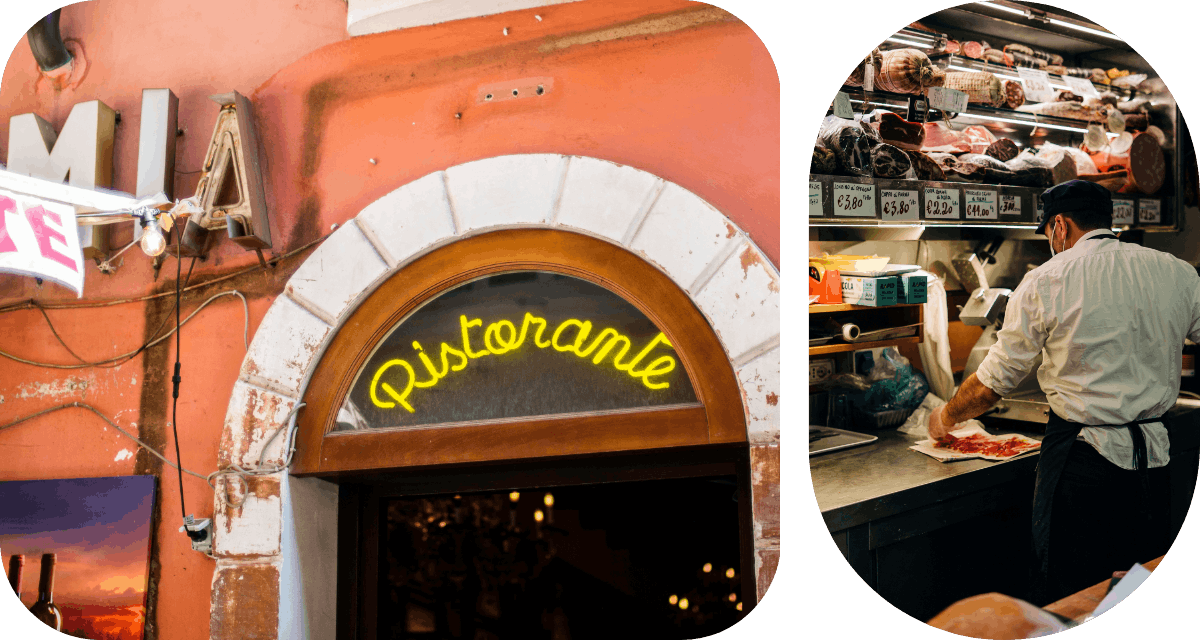
Every authentic Roman morning starts at the bar. Not a café in the breakfast sense, but a Roman bar: standing at a marble counter, espresso in one hand, a warm cornetto in the other. This is the non-negotiable ritual and something to be savoured.
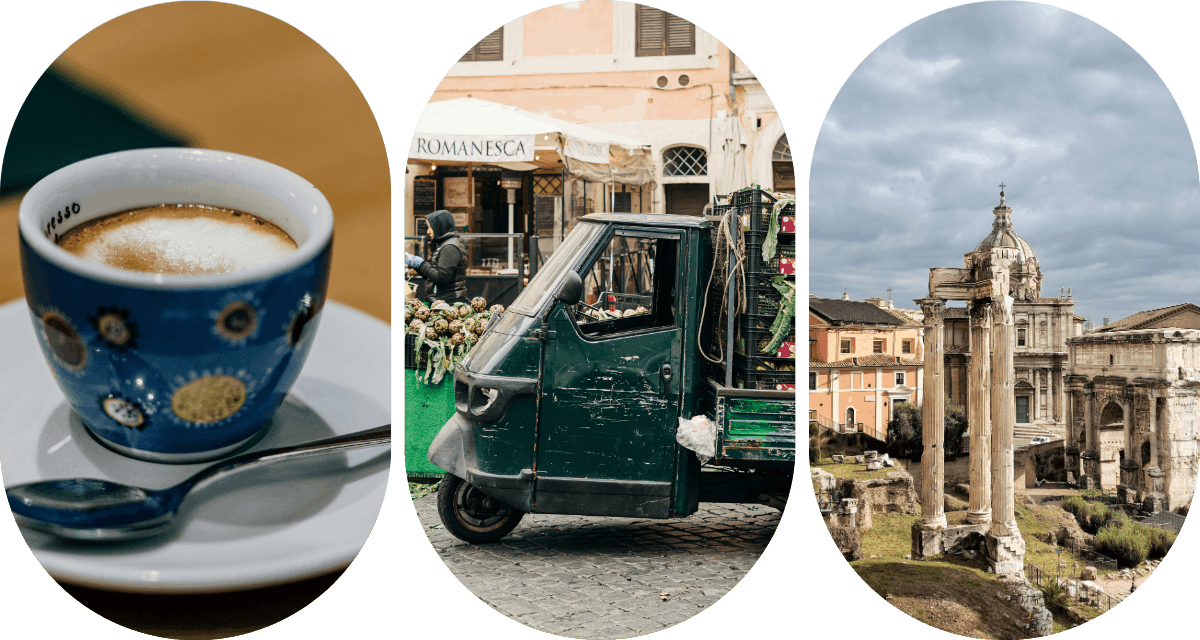
As this is your only full day in the city, you can go about it in one of two ways.
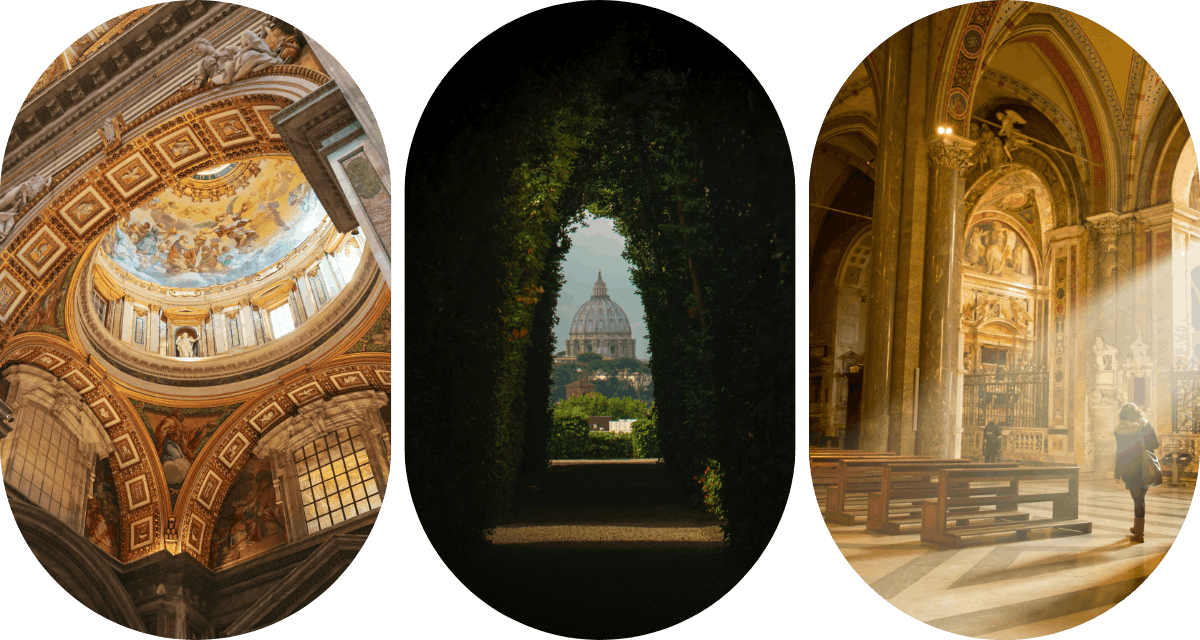
For those who want to dive into the arts and start early, a first stop at the Galleria Borghese, which is limited to 360 visitors at a time, to view Bernini’s Apollo and Daphne in natural morning light. Next up, try to secure private, early access to the Vatican Museums to see the Sistine Chapel before the crowds arrive. Palatine Hill and the Roman Forum by mid-morning will give you the chance to walk the ruins before the heat of the day.
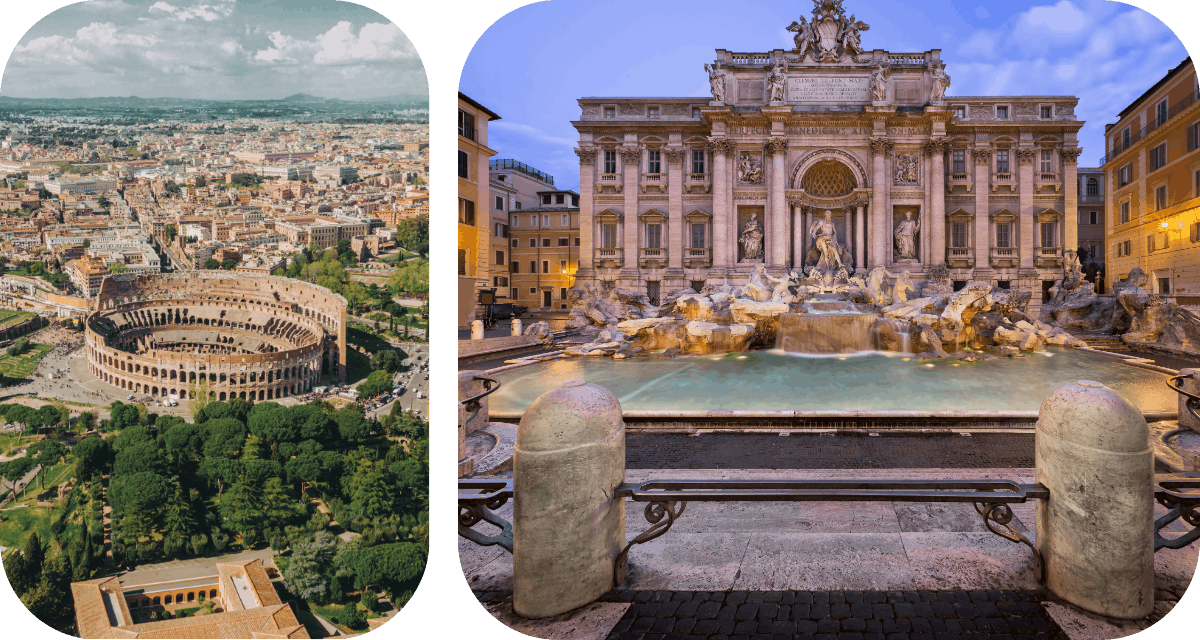
Alternatively, there’s a slower way to experience Rome, with your first stop at Campo de’ Fiori at market hour. A walk from Piazza Navona toward the Pantheon through cobblestoned lanes, taking in the sights and sounds of a true Roman morning. From there, head to the Monti neighbourhood, just east of the Forum, to work your way through a village of artisan studios, aperitivo bars and independent boutiques. For those with a curiosity for contemporary design, the Caravaggio works scattered through the city’s churches are extraordinary and entirely free. The three we would visit are San Luigi dei Francesi, Sant'Agostino, and Santa Maria del Popolo.
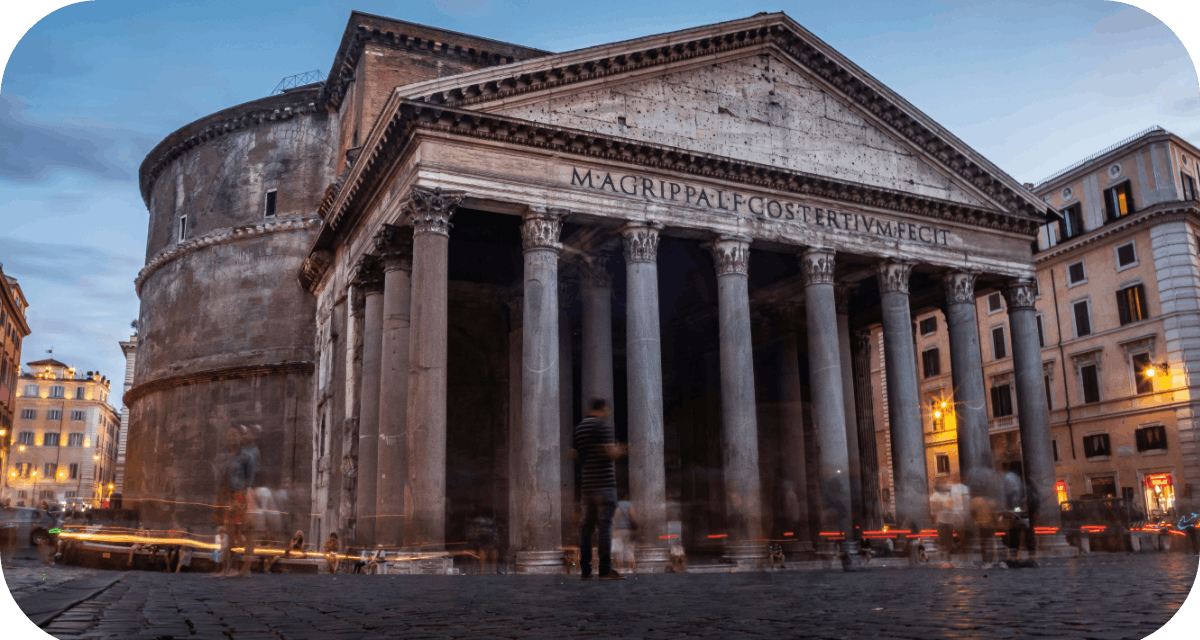
Regardless of the route you choose, try to have lunch at Pipero Roma. A personal favourite and one that might answer the question of "the best carbonara in the world”.
As the day lengthens, there are few places that dovetail better than Rome. Everything from flagship luxury houses to independent designers, leather goods to ceramics, is just streets away and worth a long afternoon of retail indulgence.
Your second evening is a little lighter after a full day exploring the city. Start at the Notos Rooftop at Six Senses, with dinner on a terrace above the city’s roofline. The views at sunset, Brunelleschi’s dome in the distance, and a city turning gold bring to a close the perfect day.
If you’re looking for something a little more traditional, choose a trattoria rather than a restaurant. Antica Pesa has been feeding Romans since 1922. Da Enzo al 29 is smaller, noisier, and serves a cacio e pepe that does Roman food justice.
NEXT STOP: TUSCANY
If Rome is the beginning, Tuscany would be our next stop. An hour and thirty minutes on the Frecciarossa from Roma Termini and you’ll see the landscape change: cypress trees, olive groves, and hilltop towns scattered around.

The area isn’t just beautiful landscape and wine either. Florence and Pisa are both waiting to welcome you back into city life, only with a distinctly Tuscan flavour now. Head a little further to the coast and embrace Cinque Terre, the five villages perched above the Ligurian Sea.
THE ETERNAL CITY
Two days in Rome isn’t enough, but it's the perfect amount of time to fall in love with one of the world’s oldest cities. You’ll leave the city already planning your return, only this time with the experience of Rome in your heart.
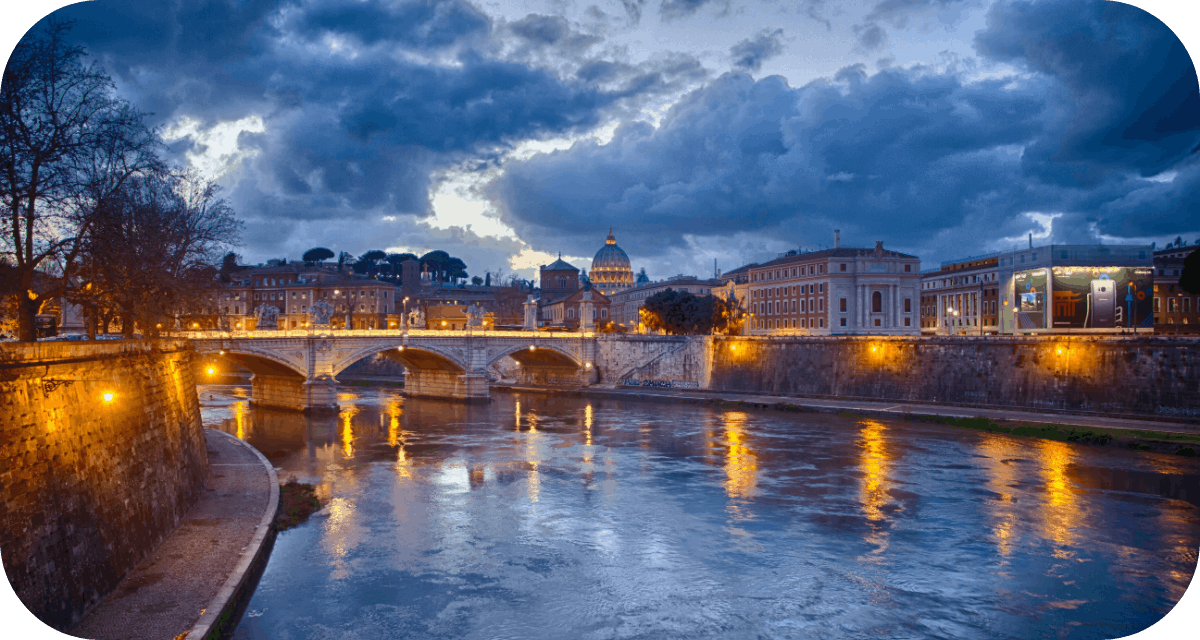
If you’ve ever wanted to see the Eternal City yourself, simply click here, create a free account and search for the hotel, landmark or area you want to stay in.
Images credited to:
Rocco Forte's Hotel de Russie
Six Senses Rome
Corinthia Rome
I’m Duncan Greenfield-Turk, and I’ve spent my life crafting extraordinary journeys that leave lasting impressions. Born in South Africa, my roots are steeped in diversity and adventure, and this inspires my approach to luxury travel design.